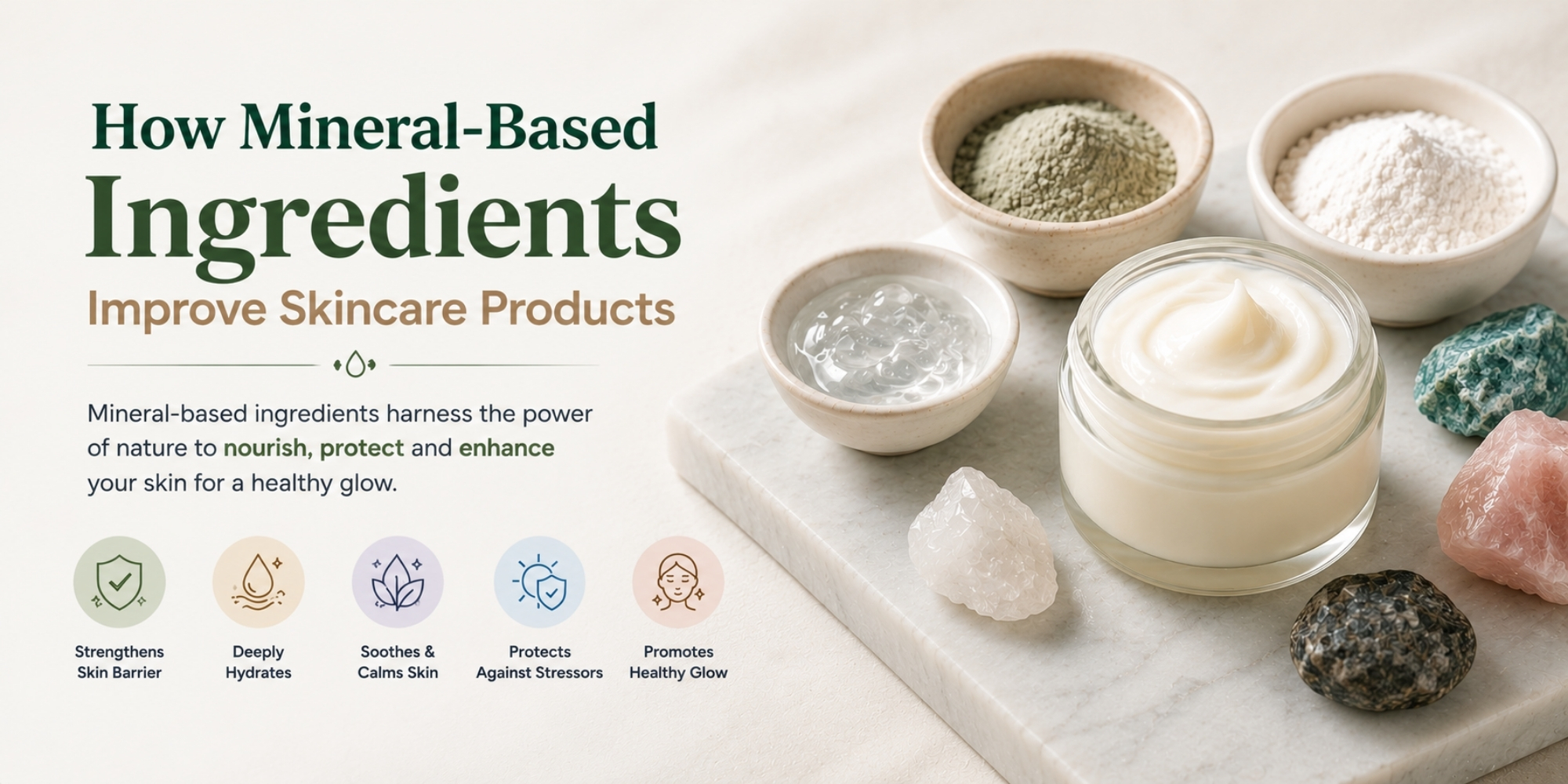
How Mineral-Based Ingredients Improve Skincare Products
The beauty and personal care industry is going through one of its biggest ingredient revolutions. Shoppers are flipping bottles around, reading labels, and asking one clear question: what is actually in this product and is it good for my skin? Amid this shift, one category of ingredients keeps coming back to the top of the conversation: minerals.
These are not trendy lab-created compounds. Minerals are naturally occurring, inorganic materials sourced from the earth, and many of them have been used in beauty and healing traditions for centuries. What has changed is the science behind them. Modern formulation research has confirmed and expanded our understanding of exactly how minerals improve skin health, why they behave differently from synthetic alternatives, and which specific minerals deliver the best results in cosmetic products.
For manufacturers, formulators, and cosmetic buyers sourcing raw materials for product development, understanding these ingredients is not just academically interesting. It directly affects product performance, consumer safety, label claims, and market positioning.
This blog covers the key skincare ingredients from the mineral category, what they actually do in formulations, and why mineral-based cosmetics continue to grow as the standard for clean, effective beauty.
What Qualifies as a Mineral-Based Skincare Ingredient?
Minerals are naturally occurring inorganic solid compounds with a defined chemical composition and physical structure. They are sourced from rocks, clay deposits, mineral springs, and the earth's surface layers. Approximately 4,000 minerals exist in nature, but a much smaller set has proven valuable in cosmetic and skincare applications.
The most commercially significant minerals in personal care formulations include talc, kaolin clay, zinc oxide, titanium dioxide, mica, silica, calcium carbonate, bentonite, and various iron oxides. Each brings specific functional properties that improve the safety, performance, aesthetics, or health benefits of the final product.
What distinguishes natural skincare ingredients from synthetic ones is primarily their mode of action. Minerals typically function through physical mechanisms such as light reflection, oil absorption, barrier formation, and gentle abrasion, rather than through chemical absorption into deeper skin tissue. This physical action is a large part of why minerals are so well-tolerated by sensitive skin and why they are considered safe for use across a wide consumer population.
Talc: The Original Cosmetic Mineral
Talc is one of the oldest and most widely used minerals in personal care, and for good reason. Chemically, it is a hydrated magnesium silicate, and its layered platelet structure gives it an exceptionally soft, silky texture that is unmatched by synthetic alternatives.
In cosmetic formulations, talc serves several important functions. It absorbs excess oil and moisture from the skin surface, reducing shine and keeping the complexion looking fresh. It improves the spreadability of powders, foundations, and blushes, giving them a smooth, easy-to-blend consistency. It also acts as a filler that adds body and bulk to pressed and loose powder formulas without contributing any coarse or gritty texture.
From a skin feel perspective, talc is uniquely comfortable. Products containing talc feel light, breathable, and non-occlusive on the skin. This makes it a preferred ingredient in setting powders, body powders, and dry-texture makeup products.
For manufacturers sourcing natural skincare ingredients, pharmaceutical and cosmetic grade talc must meet strict purity specifications, including the absence of asbestos-form fibers, which is a standard that responsible suppliers and processors verify through rigorous testing.
Kaolin Clay: Deep Pore Cleansing and Texture Control
Kaolin is a white aluminium silicate clay mineral with gentle but effective oil-absorbing and cleansing properties. It is among the softest clays available for cosmetic use, which makes it suitable for a wide range of skin types, including sensitive and dry skin, where stronger clays like bentonite can cause excessive dryness.
In skincare applications, kaolin draws impurities, excess sebum, and environmental pollutants out of the pores without stripping the skin of its natural moisture balance. This makes it a core ingredient in clay masks, gentle exfoliating cleansers, and pore-minimizing formulas.
In color cosmetics, kaolin improves adhesion and slip. It helps powders bind smoothly to the skin, reduces caking, and extends the wear time of foundations and setting powders. Its white color and neutral chemistry also make it a useful base in formulations where color consistency matters.
For industrial minerals suppliers catering to the cosmetic sector, kaolin quality is assessed on particle size distribution, whiteness index, oil absorption value, and microbial purity. All of these parameters directly affect how the mineral performs in the final product.
Zinc Oxide: UV Protection, Anti-Inflammatory Action, and Acne Control
Zinc oxide is one of the most multifunctional skincare ingredients in commercial use today. It is one of only two UV filters officially approved by the FDA for use in over-the-counter sunscreen products, the other being titanium dioxide.
As a UV filter, zinc oxide provides broad-spectrum protection against both UVA and UVB radiation. Unlike chemical UV filters such as oxybenzone or avobenzone, which work by absorbing UV energy and converting it to heat inside the skin, zinc oxide sits on the skin's surface and physically deflects radiation before it penetrates. This physical mechanism means it begins working immediately upon application, without the activation time required by chemical filters, and it generates no heat-based response inside the skin tissue.
Beyond sun protection, zinc oxide has well-documented anti-inflammatory and antimicrobial properties. It is a standard active ingredient in calamine lotions, wound-care creams, and diaper rash products because of its ability to soothe irritation, reduce redness, and support skin repair. In cosmetic formulations, this same action makes it useful for acne-prone skin, rosacea-affected complexions, and skin recovering from procedures or environmental stress.
Zinc oxide is also non-comedogenic, meaning it does not block pores, which is a critical property for any ingredient used in daily-wear cosmetics. This combination of UV protection, anti-inflammatory action, and pore safety makes it one of the most requested raw materials in mineral cosmetics development today.
Titanium Dioxide: Broad-Spectrum UV Defense and Coverage
Titanium dioxide works in close partnership with zinc oxide across a wide range of mineral formulations. It provides effective protection primarily in the UVB and upper UVA range and contributes to the overall SPF rating of mineral sunscreen products and tinted cosmetics. .
In addition to UV defense, titanium dioxide is valued for its opacity and coverage properties. It creates a smooth, soft-focus finish that visually minimizes pores and fine lines while evening out skin tone. When micronized to fine particle sizes, it becomes more translucent on the skin, reducing the white cast that older formulations were known for producing.
Formulators working with titanium dioxide in mineral cosmetics balance it with iron oxides and mica to create shade ranges that work across diverse complexions. The result is a mineral formula that protects, covers, and flatters without relying on synthetic pigments or chemical UV filters.
Mica: Natural Luminosity and Blendability
Mica is a naturally occurring silicate mineral that exists in thin, flat crystalline layers. Those layers reflect light in a way that produces a soft, luminous glow on the skin, which is why mica is so central to highlighters, eyeshadows, foundations, and blushes within the mineral cosmetics category.
When coated with titanium dioxide or iron oxides, mica can produce an enormous range of colors and finishes, from subtle pearl sheens to vivid saturated tones, all without the need for synthetic dyes or artificial colorants. This is a significant formulation advantage for brands targeting clean or natural beauty consumers who want to avoid FD&C and D&C synthetic colorants.
Beyond its visual contribution, mica improves the texture and application behavior of mineral powders. It makes products more blendable, gives them better slip across the skin, and helps them adhere evenly without patchiness or buildup.
Silica: Texture Refinement and Pore Minimizing
Silica, chemically silicon dioxide, is a mineral with dual functionality in cosmetic formulations. As a texture agent, it absorbs oil and moisture from the skin surface, controls shine, and gives products a dry, smooth finish that photographers and makeup artists describe as a soft-focus effect. This pore-blurring and line-minimizing property has made silica a standard ingredient in primers, setting powders, and BB creams.
At the biological level, silica plays a supporting role in collagen synthesis and connective tissue health. Products targeting skin firmness and elasticity, particularly anti-aging serums and creams, increasingly include silica-derived actives for this reason.
Calcium Carbonate: Gentle Exfoliation and Functional Filler
Calcium carbonate is one of the most versatile industrial minerals in the personal care category. In cosmetic applications, it is used as a mild abrasive for gentle physical exfoliation in scrubs and cleansers. Its particles are rounded rather than jagged, allowing it to remove dead skin cells without causing micro-tears on the skin surface.
It also serves as a functional filler in pressed powder formulas, improving compressibility and contributing to a smooth, even texture. As a natural, widely available mineral, calcium carbonate is a cost-effective option for formulators who need reliable, consistent raw materials.
Iron Oxides: Natural Pigment and Blue Light Protection
Iron oxides are naturally occurring minerals that provide the red, yellow, brown, and black pigments used across the cosmetics industry. They replace synthetic dyes and artificial colorants in clean formulations, delivering full-spectrum color without irritation risk.
An increasingly important additional benefit of iron oxides is their ability to filter High Energy Visible (HEV) light, commonly called blue light, emitted by screens and digital devices. Research has linked prolonged blue light exposure to hyperpigmentation and oxidative skin damage. Tinted mineral formulations that include iron oxides provide a layer of protection against this source of skin stress that standard UV filters do not address, making them relevant to the growing number of consumers who spend significant time in front of screens.
Why Mineral Ingredients Are Ideal for Sensitive and Reactive Skin
One of the most consistently observed advantages of mineral-based formulations is their tolerability by sensitive, reactive, and condition-affected skin. The reasons for this go back to their physical mode of action.
Minerals work primarily by forming barriers, absorbing oils, scattering light, or gently abrading the skin surface. They do not need to be absorbed into deeper tissue to perform their function. This reduces the risk of sensitization, irritation, or allergic reactions compared to synthetic actives that penetrate the skin and affect cellular processes.
Mineral formulations are also typically free of the fragrances, preservatives, and synthetic additives that are responsible for a large proportion of adverse reactions in conventional cosmetics. For consumers managing eczema, rosacea, psoriasis, or post-treatment skin sensitivity, switching to mineral-based products is often among the most effective steps they can take.
How HTMC Group Supports Mineral-Based Cosmetic Manufacturing
HTMC Group is one of India's leading manufacturers, processors, and exporters of industrial minerals for the cosmetic, pharmaceutical, and personal care industries. Our product range includes cosmetic-grade talc, kaolin, calcium carbonate, zinc oxide, bentonite, silica, and other key minerals that go directly into personal care formulations.
All of our cosmetic-grade minerals are manufactured in ISO, BRC, FDA, and EXCiPACT certified facilities and tested to the purity and particle size specifications required by cosmetic formulators. We supply to manufacturers in over 30 countries across five continents, with consistent quality, full technical documentation, and reliable supply chain support.
If you are developing or sourcing mineral-based skincare or cosmetic products and need a dependable raw material supplier, connect with our technical team to discuss your requirements.
Frequently Asked Questions
The most widely used skincare ingredients from the mineral category in cosmetics include talc, kaolin clay, zinc oxide, titanium dioxide, mica, silica, calcium carbonate, iron oxides, and bentonite. Each mineral contributes specific functional properties such as UV protection, oil absorption, texture improvement, pigment, or barrier support, and they are often used in combination to achieve the desired performance in the final product.
Yes, natural skincare ingredients derived from minerals are generally very well-tolerated by sensitive, reactive, and condition-affected skin. Because most minerals work through physical mechanisms rather than chemical absorption, they are less likely to cause irritation or sensitization than synthetic actives. Minerals like zinc oxide and kaolin are regularly recommended by dermatologists for sensitive, acne-prone, and post-procedure skin types.
Mineral cosmetics are formulated primarily with naturally occurring minerals such as mica, zinc oxide, titanium dioxide, and iron oxides, and are typically free from synthetic fragrances, artificial dyes, parabens, and chemical UV filters. This results in products that deliver visible cosmetic results while actively supporting skin health rather than simply sitting on top of it. The clean ingredient profile also aligns with growing consumer demand for transparent, non-toxic beauty products.
Zinc oxide and titanium dioxide are the only two UV filter minerals currently approved by the FDA for use in over-the-counter sunscreen formulations. Both work through physical UV reflection and deflection rather than chemical absorption, which is why they are classified as physical or mineral sunscreens. They are safe for use across all skin types and begin working immediately upon application without any activation period.
Cosmetic-grade minerals must meet specific purity standards, particle size distributions, and microbiological requirements that are different from technical or industrial grades of the same material. When sourcing, it is essential to work with a supplier who can provide full technical data sheets, certificates of analysis, and regulatory documentation such as REACH compliance, FDA compliance, and relevant food or cosmetic grade certifications. HTMC Group supplies a complete range of cosmetic-grade minerals with full technical and regulatory support for manufacturers globally.
Get in touch with us!
×